
 By
By A Polish archaeological team working in Sudan has uncovered an Arabic manuscript that appears to confirm the historical existence of King Qasqash, a ruler long preserved in local memory but previously known to scholars only through limited written references.
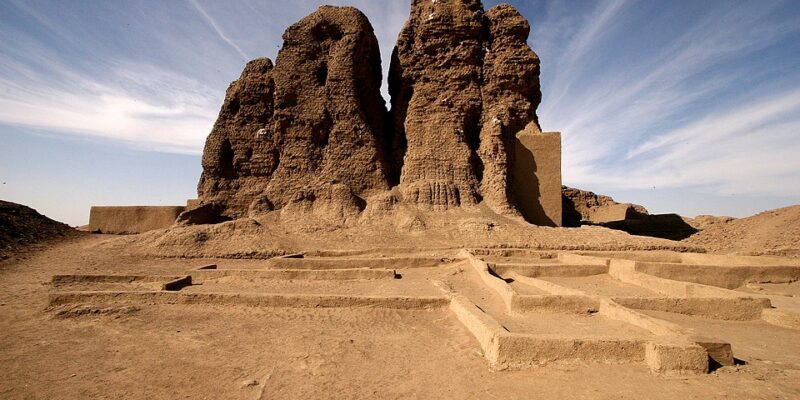
The discovery, announced by researchers with the Polish Centre of Mediterranean Archaeology at the University of Warsaw, offers a rare and vivid link between legend, oral tradition and the written record. It also adds another chapter to the long history of Old Dongola, the medieval capital of the Kingdom of Makuria and one of the most important political centers in Africa during the Middle Ages.
The manuscript was found during excavations at Old Dongola, on the eastern bank of the Nile. Archaeologists recovered it from refuse layers inside a large residential building that local residents have long called the “King’s House.” The new find lends weight to that traditional identification, suggesting that the name preserved by generations in the region may have carried real historical memory.
Polish archaeologists working in Old Dongola in Sudan have discovered an Arabic document confirming the existence of King Qasqash, a ruler previously regarded as a semi-legendary figure.@PCMA_UW https://t.co/DLxbg6Sxk6 pic.twitter.com/aaotuATDAs
— Science in Poland (@ScienceinPoland) March 24, 2026
The document is a written order issued in Qasqash’s name. Researchers said it provides the first direct historical proof of the king, whose existence had previously rested on later oral traditions and brief mentions in a 19th-century hagiographic text.
“The written order issued by King Qasqash proves the historical existence of this figure, previously known only from brief references in a hagiographic work dating to the early nineteenth century. Although the content of the letter itself may appear relatively mundane, it offers a unique glimpse into the socio-economic relations of the Kingdom of Dongola during a period of intensive Arabisation and Islamisation, particularly into the relationship between the king and his subjects. We may suspect that Qasqash and his court skilfully managed the distribution of material goods – and, consequently, social prestige – within the traditional system of royal patronage. This document provides only a small but valuable piece of evidence for that process,” said Tomasz Barański, an Arabist at the Polish Centre of Mediterranean Archaeology who is studying the Arabic material.
The order was among more than 20 Arabic texts recovered from the same building. Archaeologists also found high-status artifacts, including cotton, linen and silk textiles, along with objects made from ivory and rhinoceros horn. Taken together, the discoveries point to the elite character of the residence and to the continued importance of the region after the height of medieval Makuria.
The manuscript itself survived intact. Researchers said its language and appearance offer clues about a society in transition, as Arabic became more important in administration and written communication while local Nubian languages likely remained widely spoken in daily life.
“The use of non-standard grammatical forms and the rather unsophisticated hand should not be surprising, particularly in an environment where Arabic had not yet become a native language. Moreover, the irregular shape of the sheet of paper on which the order was written suggests that this text may have been only a draft of the actual document,” Barański said.
That detail makes the find especially valuable. Rather than preserving only grand royal language or monumental inscriptions, the document appears to capture the practical work of government: a king, a court and a written order moving through a changing society.
Researchers said the document shows that Arabic was already being used by scribes serving the successors of Makuria around the turn of the 17th century. But they said more work is needed to understand how deeply the language had entered royal, religious and everyday life in the region.
“This observation is significant for further research into the scope and pace of the processes of Islamisation and the formation of Arab identity in Sudan,” the Polish Centre of Mediterranean Archaeology stated.
For archaeologists, the find is a documentary breakthrough. For the people of Dongola, it is also something more personal: a sign that stories handed down across generations can survive not merely as legend, but as history waiting to be recovered.
After more than 60 years of excavations at Old Dongola, the site continues to yield discoveries that connect Africa’s medieval past with the living memory of the communities who inherited it. In the case of King Qasqash, a ruler once thought to stand somewhere between history and legend has now stepped more firmly into the historical record.