
 By
By For decades, the story of the Americas has been told as a steady unfolding—waves of migration settling, adapting, and gradually becoming the peoples we recognize today. But high in the Andes above modern Bogotá, that narrative has now been quietly upended.
A new genetic study reveals that one of the continent’s earliest populations did not evolve into later societies, did not mix into neighboring groups, and did not survive in any detectable form. It simply disappeared.
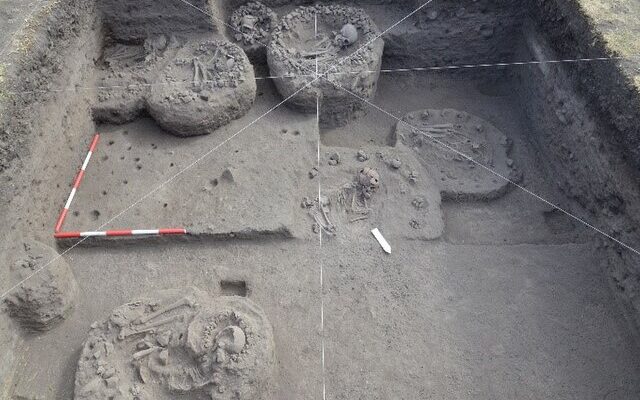
Published in Science Advances in May 2025, the research examines genome-wide data from 21 ancient individuals recovered from sites across the Bogotá Altiplano, spanning roughly 6,000 to 500 years ago. At the center of the discovery are seven hunter-gatherers from the Checua site, dated to approximately 6000 years before present. Their DNA tells a story that archaeologists had not seen before—and one that does not continue.
Rather than fitting into known Indigenous lineages of North or South America, the Checua individuals belong to a distinct genetic group. They do not closely match earlier populations, and more strikingly, they leave no identifiable descendants among later peoples in the region.
Researchers refer to such groups as a “ghost population”—a lineage visible in ancient DNA but absent from both modern populations and subsequent genetic layers. It is not merely that their culture faded or their settlements were abandoned. Genetically speaking, they vanish.
Lead author Kim-Louise Krettek, of the Senckenberg Center for Human Evolution and Paleoenvironment at the University of Tübingen, described the group as part of an early wave of humans who rapidly dispersed across South America after the initial peopling of the continent. But whatever foothold they established on the Altiplano proved temporary.
“The genomes from the Checua site belonged to a comparatively small population of hunter-gatherers on the Altiplano,” Krettek explained.
The surprise deepened as researchers compared the data across time. By around 2,000 years ago—during what archaeologists call the Herrera period—the genetic signature changes entirely. The earlier Checua lineage disappears and is replaced by incoming populations, likely associated with Chibchan-speaking agricultural societies.
Co-author Andrea Casas-Vargas of the Universidad Nacional de Colombia emphasized the break: comparisons revealed “a lineage that hasn’t been reported” before.
Later still, the genetic profiles shift again. Individuals associated with the Muisca civilization, dating from roughly 500 to 1,200 years ago, show yet another ancestry. The pattern is not continuity, but replacement—successive populations moving through the same geography without preserving the genetic legacy of those who came before.
The Checua lineage, once established at 3,000 meters above sea level, disappears so completely that it leaves no detectable trace—not in later ancient remains, and not in modern Indigenous groups.
Excavations at the Checua site, near Nemocón in Colombia’s Cundinamarca department, first uncovered human remains in the late 1980s, with further discoveries in the 1990s and early 2000s. The preservation conditions at high altitude allowed researchers, for the first time, to extract high-quality ancient DNA from pre-Hispanic Colombia—opening a window into a period of history that had been almost entirely invisible.
What emerges is a far more volatile picture of early America than previously assumed. The Bogotá Altiplano—part of the critical land bridge between Central and South America—appears not as a stable cradle of continuous settlement, but as a corridor of movement, isolation, and abrupt demographic change.
Why the Checua population vanished remains unresolved. The possibilities are familiar but inconclusive: migration, conflict, disease, environmental change, or absorption into later groups without leaving a measurable genetic imprint. Each explanation carries its own implications, but none fully accounts for the totality of the disappearance.
What is clear is that the early history of the Americas was not a single, unbroken lineage. It was a series of experiments—some enduring, others extinguished without a trace.
The study’s title—“A 6000-year-long genomic transect from the Bogotá Altiplano reveals multiple genetic shifts in the demographic history of Colombia”—reads like a technical summary. But its implications are broader. Entire peoples once lived, adapted, and disappeared in places we can still visit today, leaving behind little more than fragments of bone and strands of DNA.
History, it turns out, is not only what survives. It is also what vanishes.