
 By
By Archaeologists working in southern Spain say they may have uncovered the first direct physical evidence of the war elephants used by Hannibal during the Second Punic War—a single bone from an elephant’s foot, found amid the remains of an ancient battlefield.
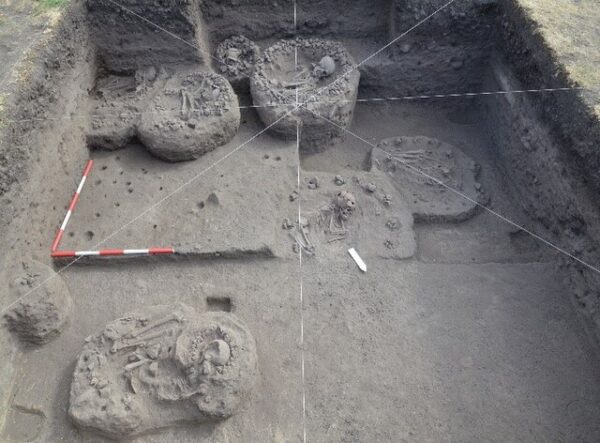
The discovery was made at Colina de los Quemados, a fortified Iberian settlement overlooking the Guadalquivir River near the modern city of Córdoba. Excavations began around 2020 as a preventive measure ahead of expansion work at the nearby Provincial Hospital and soon revealed layers associated with late third-century BC military activity, reports Popular Mechanics.
🚨 JUST IN: The bone that proves Hannibal really DID cross the Alps with elephants — archaeologists find first direct evidence for the beasts of war 🚨
Breakthrough discovery in the French Alps: A 2,200-year-old elephant bone (likely African forest elephant) unearthed at a… pic.twitter.com/ReS0BU15Is
— The scoop stateside (@ScoopStateside) February 7, 2026
Within those layers, researchers recovered Carthaginian coins minted in Cartagena between 237 and 206 BCE, along with stone projectiles and heavy arrowheads consistent with Roman siege weapons such as the scorpio. Together, the artifacts point to fighting during the Second Punic War, when Hannibal’s forces campaigned across the Iberian Peninsula against Roman control.
Beneath the rubble of a collapsed adobe wall, archaeologists uncovered a small, roughly cube-shaped bone measuring about 10 centimeters. Detailed anatomical comparison with modern Asian elephants and ancient steppe mammoths identified the fragment as the third carpal bone (os magnum) from the right forelimb of an elephant.
The bone’s size exceeds that of a female Asian elephant but more closely matches African elephants—the species described in ancient sources as part of Hannibal’s forces. Radiocarbon dating places the bone in the pre-Roman Iron Age, between the late fourth and early third centuries BCE, aligning with the war’s chronology and ruling out later intrusion.
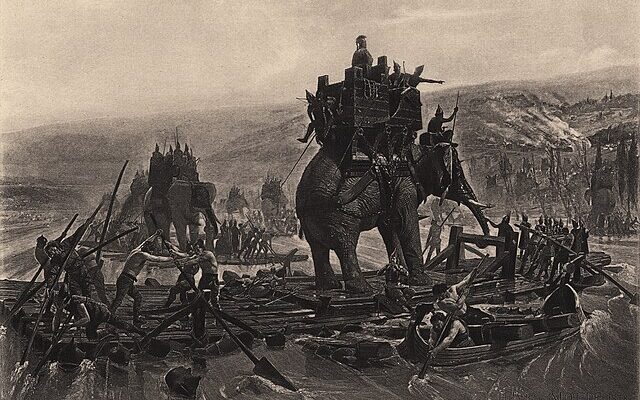
Hannibal’s use of war elephants remains one of antiquity’s most enduring military legends. Ancient historians, including Livy, wrote that the animals terrified Roman cavalry with their size and unfamiliar scent, helping to sow panic at battles such as Trebia. At Zama, by contrast, Roman commander Scipio Africanus reportedly used horns and maneuvering tactics to frighten the elephants, driving them back into Carthaginian ranks.
Until now, evidence for these animals in Europe has rested largely on written accounts, artistic depictions, and numismatic imagery. No skeletal remains had been conclusively tied to Hannibal’s campaigns.
The newly identified bone, published in the Journal of Archaeological Science: Reports, offers what researchers describe as a potential “landmark” discovery—providing the first direct archaeological link to these so-called “tanks of antiquity” in Punic warfare. While the find does not establish that the elephant crossed the Alps with Hannibal’s army, it does lend tangible support to accounts of their use in Carthaginian operations in Hispania, grounding one of ancient history’s most famous war stories in physical evidence.