
 By
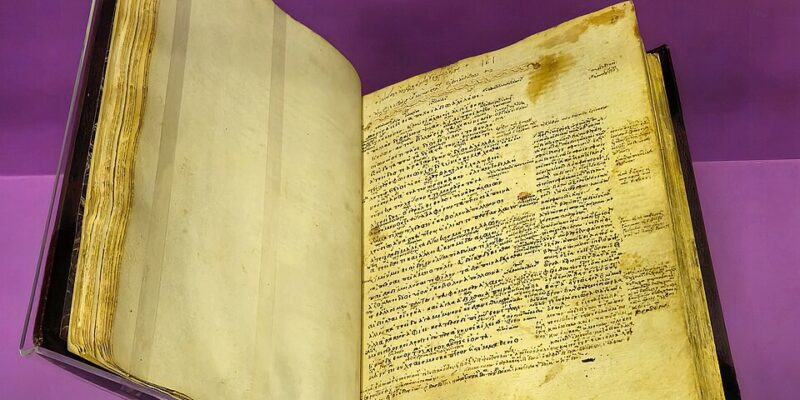
By Archaeologists have uncovered an unusual fragment of Homer’s Iliad in an ancient Egyptian burial site, a discovery researchers say marks the first known case of a Greek literary text being deliberately incorporated into the mummification process.
The University of Barcelona announced the find April 20 after researchers working at the Al Bahnasa necropolis in Egypt discovered a papyrus fragment from the Iliad inside a Roman-era tomb dating back roughly 1,600 years. The site corresponds to the ancient city of Oxyrhynchus, a major urban center in Greco-Roman Egypt and one of the most important sources of ancient papyri ever found.
The University of Barcelona’s Oxyrhynchus Archaeological Mission has been excavating the necropolis since 1992. During the latest campaign, researchers found the papyrus positioned directly on a mummy in a manner associated with embalming practices.
According to the university, the fragment was “placed on the abdomen [of the mummy] as part of the embalming ritual.”
“In previous campaigns, the Oxyrhynchus Archaeological Mission had already documented papyri written in Greek in similar positions, but all contained magical or ritualistic content,” the university release noted. “A literary text such as the ‘Iliad’ had never before been found in this context.”
The text comes from Book II of the Iliad, the section describing the assembly of Greek troops before the Trojan War. Papyrologist Leah Mascia identified the fragment, linking the funerary object to one of the central works of the Western literary tradition.
Professor Ignasi-Xavier Adiego of the University of Barcelona said the importance of the discovery lies not merely in the text itself, but in where it was found.
“Since the late 19th century, a huge number of papyri have been discovered at Oxyrhynchus, including Greek literary texts of great importance,” he said. “But the real novelty is finding a literary papyrus in a funerary context.”
The Iliad, traditionally attributed to Homer, is an epic poem centered on the Trojan War and is believed to date to around the eighth century B.C., more than 1,000 years before the mummy was interred. Its presence in a Roman-era Egyptian burial raises new questions about how Greek literary culture, personal belief, and funerary ritual intersected in the ancient world.
The discovery came during the excavation of three limestone burial chambers, where archaeologists also found multiple Roman-era mummies and decorated wooden sarcophagi. Some of the burials showed evidence of earlier disturbance by looters.
Still, university officials described the Homer fragment as the most significant object recovered during the campaign.
“The discovery is exceptional: It is the first time in the history of archaeology that a Greek literary text has been found deliberately incorporated into the mummification process,” the school noted.
Researchers said the placement of the text distinguishes it from earlier finds at Oxyrhynchus, where papyri discovered in comparable positions typically contained religious, magical, or ritual material. The use of a literary passage instead suggests a different kind of symbolic role for the text, though scholars have not yet determined why this specific excerpt was chosen.
The find adds to a broader wave of archaeological discoveries announced from Egypt in recent months. In April, authorities reported the discovery of a large statue that may represent a pharaoh associated with the biblical Exodus story. Earlier in the spring, archaeologists also uncovered eight ancient papyrus scrolls near a group of brightly painted coffins dating back more than 2,600 years.
For scholars of the ancient Mediterranean, however, the Oxyrhynchus find stands apart. It connects one of the best-known texts of Greek antiquity to the intimate ritual world of Egyptian burial, offering a rare glimpse of how literature could travel across cultures, languages, and religious practices long after its composition.