

Inspirational

Former SpaceX Engineer Plans October Test of Water-Fueled Satellite

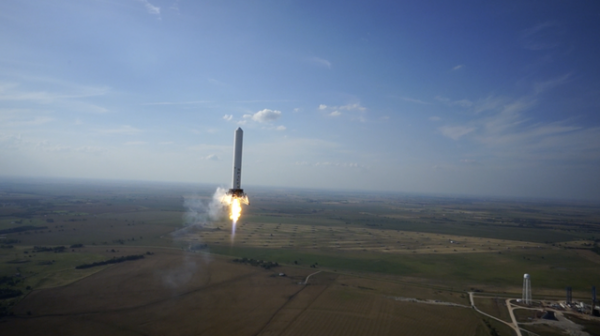
[SpaceX, CC0, via Wikimedia Commons]

A former SpaceX engineer is preparing to test an unconventional approach to rocket propulsion: using water as the foundation for fuel in space.

Halen Mattison, CEO and co-founder of the startup General Galactic, is set to demonstrate that water can function as a propellant for both chemical and electrical systems aboard a satellite. The company’s upcoming demonstration mission, dubbed Trinity, will launch an approximately 1,100-pound satellite aboard a SpaceX Falcon 9 rocket in October, according to reports.

The concept is rooted in a long-standing principle of space exploration known as in-situ resource utilization—an approach that envisions harvesting materials already present on celestial bodies, such as frozen water on the Moon or Mars, and processing them into usable fuel. If viable, the method could reduce reliance on costly Earth-based resupply missions and enable return trips or prolonged operations far from home.

For the Trinity mission, the satellite will carry water as its sole propellant source. Through electrolysis, the onboard system will split water into hydrogen and oxygen. The hydrogen will then be burned with oxygen acting as the oxidizer in a chemical propulsion test designed to generate high-thrust bursts.

At the same time, the mission will test an electrical propulsion system. Oxygen generated from electrolysis will be ionized into plasma using a strong electrical current. The plasma will then be expelled through a magnetic field, providing steady, lower-thrust maneuvers suitable for orbital adjustments.

Mattison told Wired that the technology could have national security applications, particularly for military satellites requiring enhanced maneuverability. He pointed to reports that U.S. satellites have been closely tracked by Chinese and Russian counterparts, suggesting a potential need for spacecraft capable of evasive repositioning.

The approach, however, presents engineering challenges.

“It makes material selection and design of the device or devices very, very challenging,” said Ryan Conversano, a General Galactic consultant and former NASA technologist, referring to the corrosive risks posed by ionized oxygen interacting with sensitive satellite electronics.

Skepticism remains within parts of the scientific community about whether water-based systems can outperform conventional chemical propellants. Critics note that any performance gains must be weighed against the additional mass and complexity introduced by electrolysis equipment and related hardware.

Still, proponents argue that the long-term advantages could be transformative. Researchers are continuing to explore methods for extracting water and oxygen from lunar regolith and Martian soil, developments that could eventually allow stranded spacecraft to refuel using local resources.

General Galactic’s October test will serve as a practical trial of a decades-old idea that has largely remained theoretical. If successful, it could mark a step toward more sustainable space travel—and a future in which water, abundant beyond Earth, becomes the fuel that powers deeper exploration.

What's your reaction?

Excited
0
Happy
0
In Love
0
Not Sure
0
Silly
0

You may also like

Leave a reply

Your email address will not be published. Required fields are marked *