
 By
By Archaeologists working at the ancient Maya city of Ucanal have uncovered evidence of a dramatic ritual fire dating to the early ninth century AD—an event researchers say marked a public and deliberate overthrow of the city’s ruling dynasty.
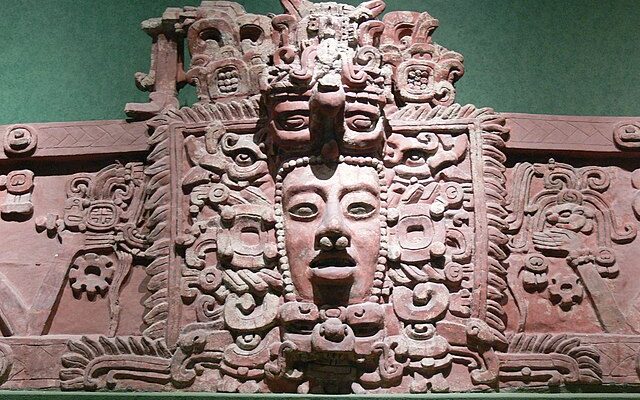
The discovery comes from excavations at Ucanal, once the capital of the K’anwitznal kingdom, where charred human remains and thousands of valuable ornaments were found embedded in the construction fill of a temple-pyramid in a public plaza. The material was not buried with care but dumped openly, suggesting a highly visible act meant to be witnessed by the broader population, according to Popular Mechanics.
According to a study published in the journal Antiquity, the find “marked a public dismantling of an old regime.”
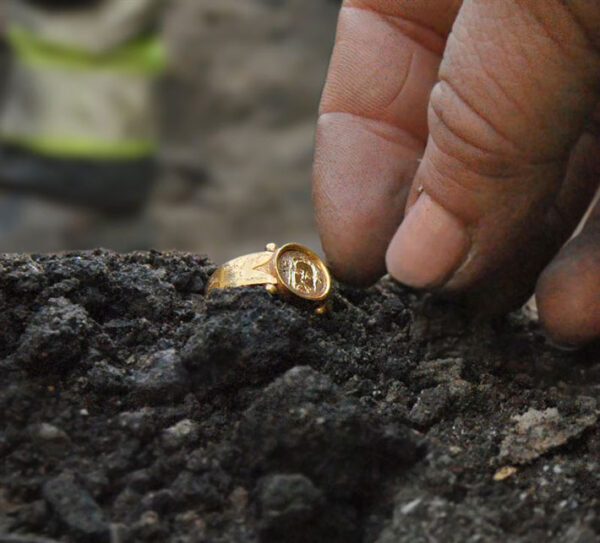
Researchers determined that bodies and grave goods—including a jeweled stone mask, fragments of a greenstone headband, jade adornments, pendants, beads, plaques, mosaics, and large blades—were removed from a royal tomb and relocated to an open area near a burial location. There, they were burned in a single, intense fire that reached temperatures exceeding 800 degrees Celsius.
“This event marked a moment of change in the kingdom and in the lowlands,” the authors wrote. “Rather than examine this fire-burning event as a bookend to Maya history, we view it as a pivot point around which the K’anwitznal polity reinvented itself and the city of Ucanal went on to a flourishing of activities.”
The fire appears to have coincided with the rise of a new ruler, Papmalil, whose ascent broke with centuries of dynastic succession. Scholars believe he may have originated outside the established royal lineage, possibly even beyond the region.
“Papmalil’s rule was not only seminal because of his possible foreign origins—perhaps breaking the succession of ruling dynasts at the site—but also because his rule shifted political dynamics in the southern Maya lowlands,” the researchers noted.
Under Papmalil’s leadership, Ucanal entered a period of renewed growth. Archaeological evidence points to major construction projects in central ceremonial zones and surrounding residential districts, suggesting political consolidation rather than collapse.
The deposit itself was uncovered during a 2022 excavation of the pyramid’s construction layers. Analysis revealed bones from at least four adults mixed with more than 1,470 pieces of greenstone artifacts, all damaged by heat. There was no attempt to safeguard the remains.
The researchers describe the act as one that “marked the symbolic and literal destruction of an earlier K’anwitznal dynastic line.” They add that it “appears to have been an act of desecration: it was dumped at the edge of a crude wall used as a construction pen and no effort was made to protect the fragmented bones and ornaments from the tomb blocks deposited on top of them as construction fill.”
Such a spectacle, the study concludes, was likely intended to provoke shock and awe. It “could dramatically mark…the dismantling of an ancient regime.”